No work or limited repair
A sound covering may need no work now, or a local repair at a boot, flashing joint or damaged group of shingles. Explain the defect and how the proposed repair reconnects it to sound material.

A free roof inspection helps connect what you have noticed to the condition of the roof. Ask about a leak, visible damage or a replacement you are considering in Richardson.
A roof inspection looks at the covering, the connections and how water leaves the roof. Walking a roof can bring lifted shingle edges, failing seals and old repairs into view, but the approach depends on pitch, surface condition, weather and safe access. A roof that is slippery, fragile or unsafe to walk needs a different assessment approach.
Your observations help set the starting point. Water appearing near a wall, a stain after wind-driven rain or a repair that keeps reopening gives the inspection a useful direction. You do not need to climb up or decide which part has failed. The aim is to explain the visible condition and the work it supports, including when no roofing work is needed now.
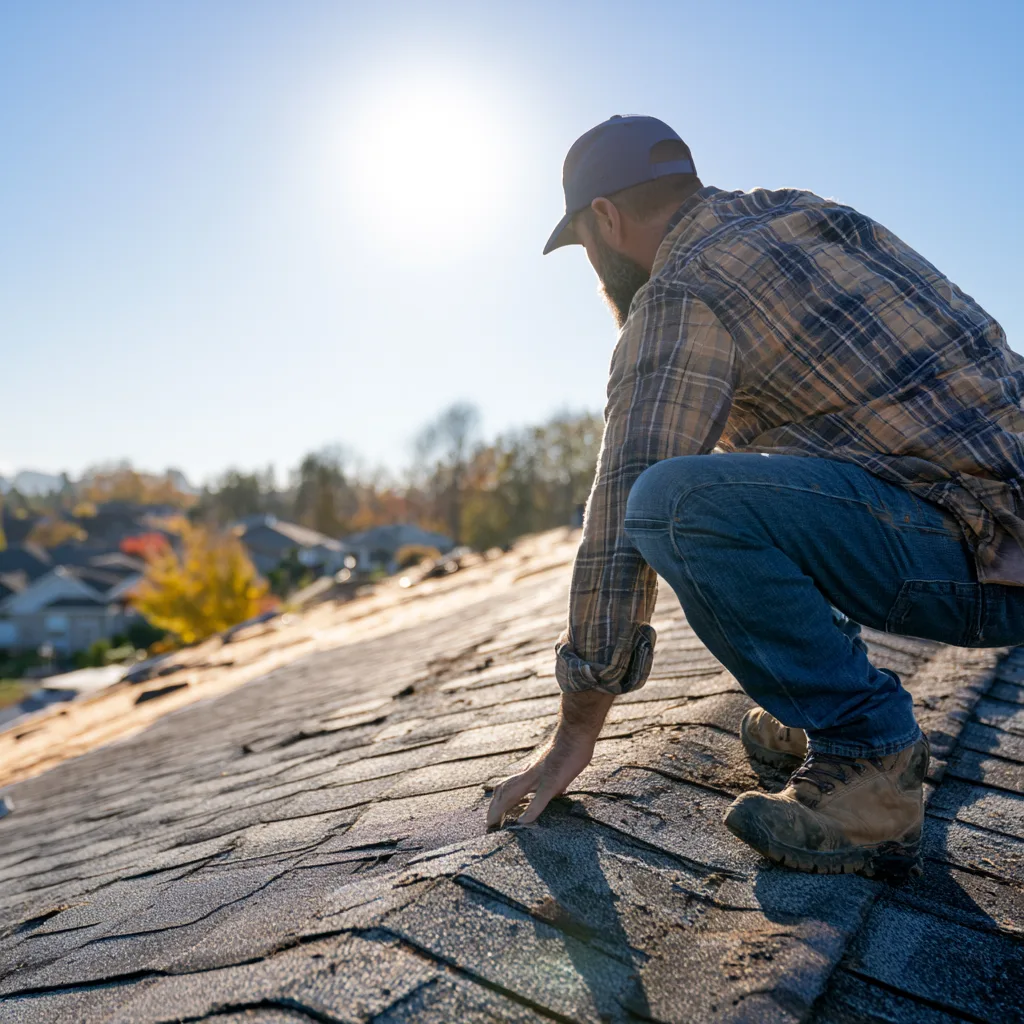
The field of the roof and its smaller connections need to be considered together.
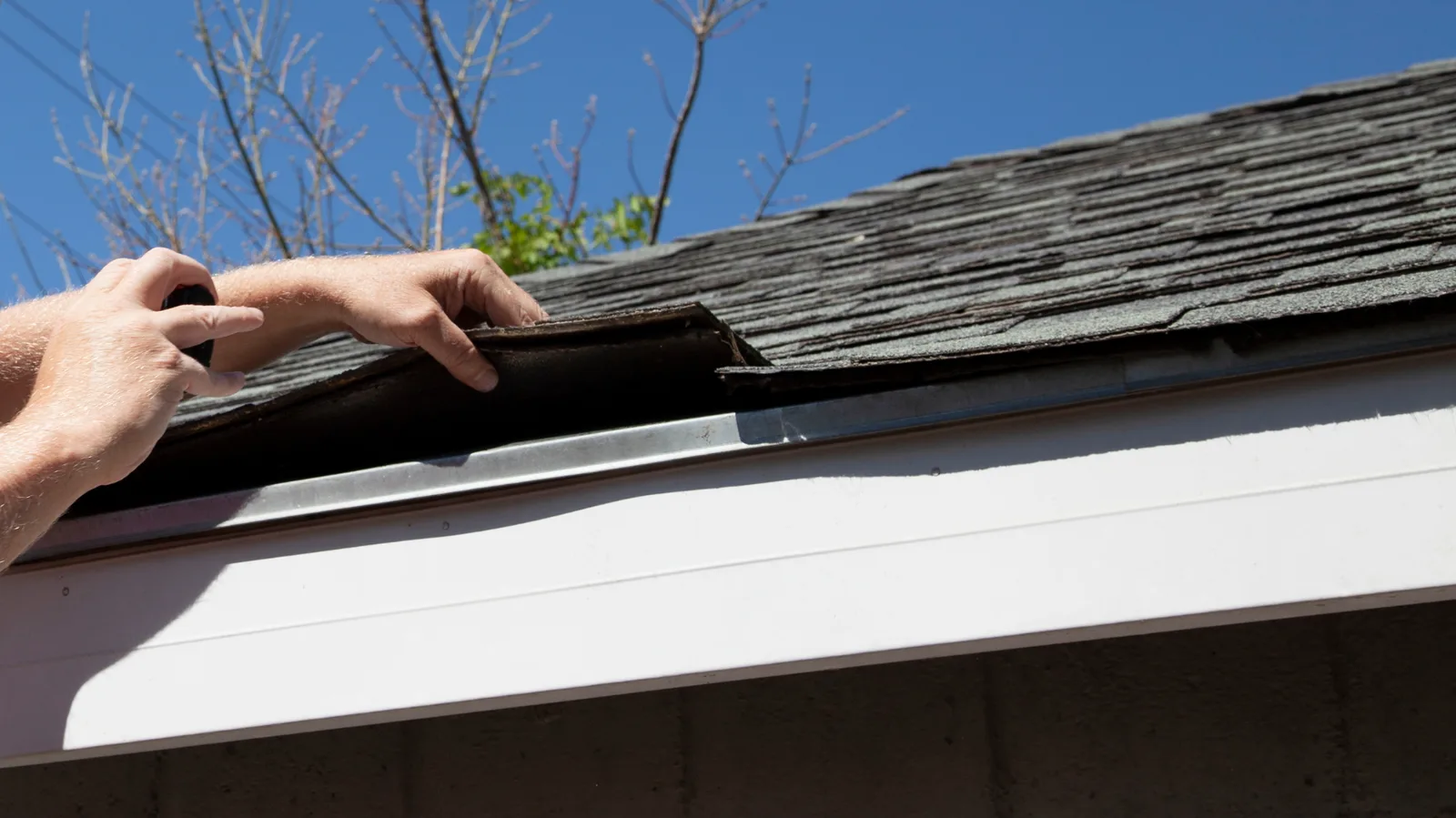
Shingles are checked for displacement, damaged edges and whether surrounding material can be lifted and reworked. A patch may look intact on top while its connection to the older roof remains weak.
Observed damage does not automatically reveal when it happened. Weather history can provide context, but the roof findings determine repairability.
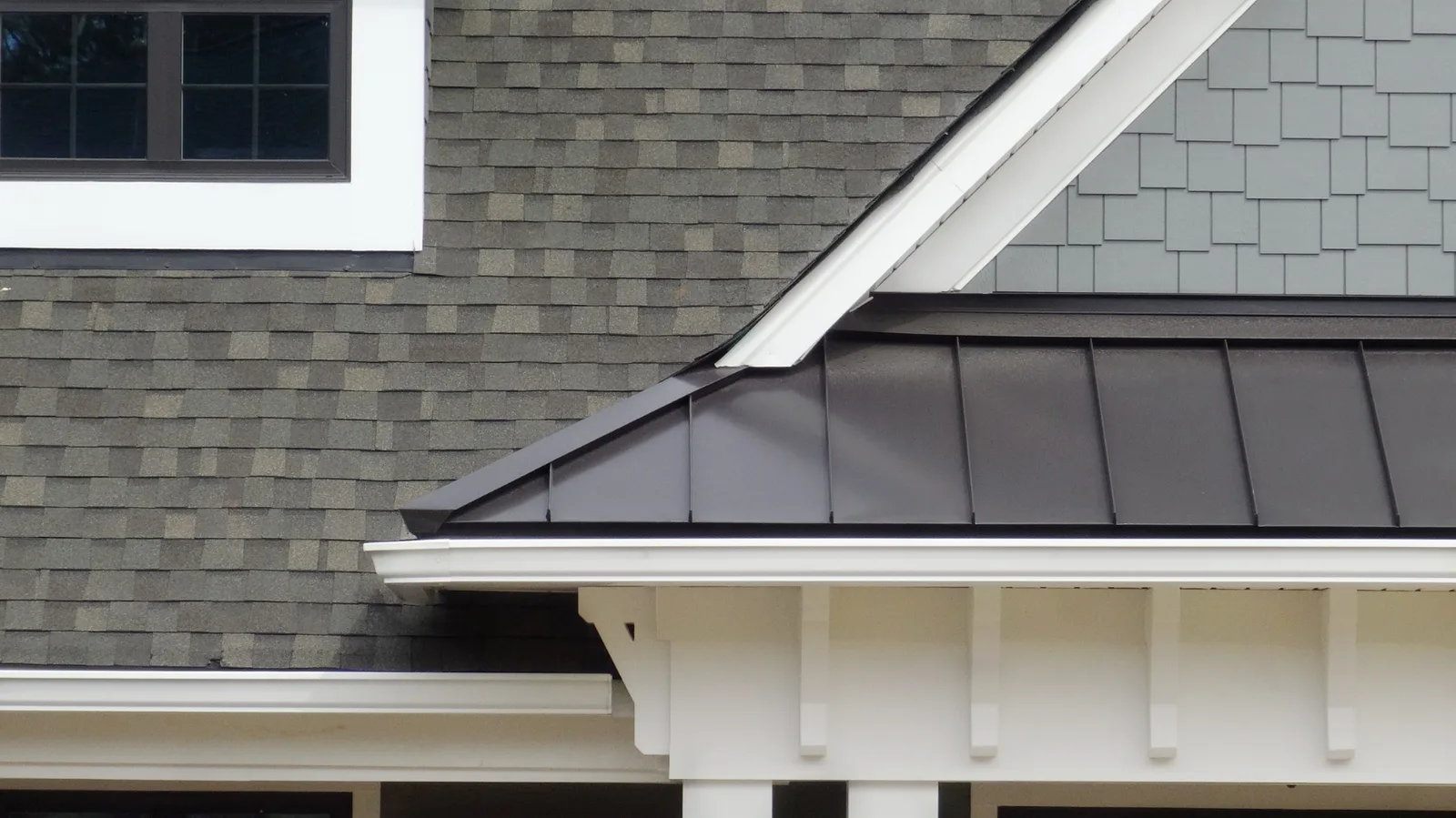
Flashing protects the places where the roof meets something else. The review follows those joints, including chimney edges, pipe boots and the connection between a lower porch and the house.
A stain below a chimney may also involve masonry or water entering higher in the wall. Roofing work has to be separated from those other repairs.
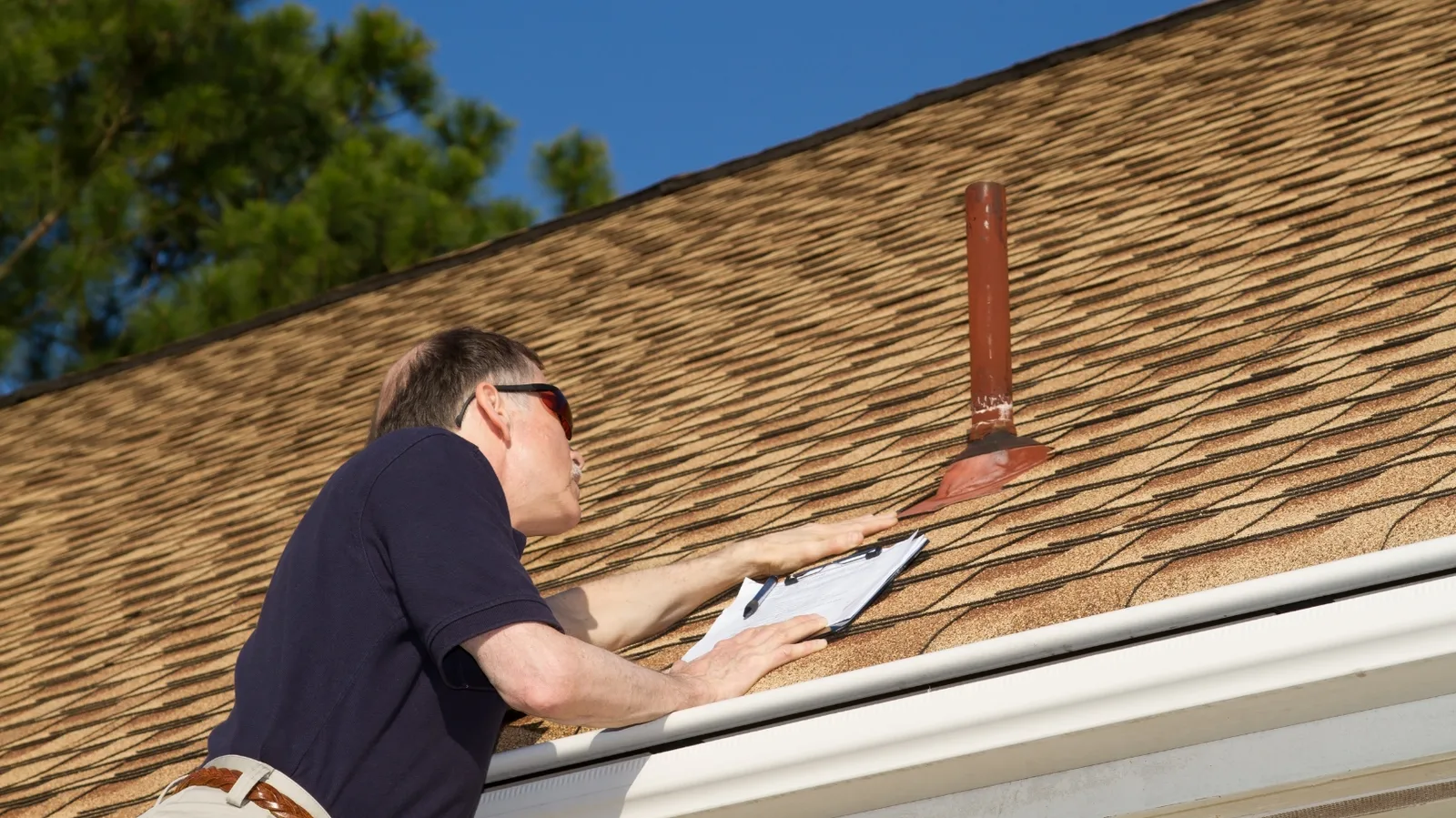
The eave, gutter line and roof valleys influence where runoff travels. Obstructions and failed connections can concentrate water at a vulnerable edge instead of carrying it away.
Roof access and visible findings also set the limits of an inspection. Concealed decking or insulation may need further investigation or opening during agreed repair work.
The next step should follow the condition found, rather than a preset replacement recommendation.
For a localized defect, roof repair explains how the failed detail is connected back to sound material.
A sound covering may need no work now, or a local repair at a boot, flashing joint or damaged group of shingles. Explain the defect and how the proposed repair reconnects it to sound material.
Widespread brittle shingles, repeated failures or damaged layers beneath the covering can make scattered repairs less useful. A replacement discussion should identify what needs removal and why.
Yes. Free roof inspections and roof walks are offered. Tell us the property location and the concern so the inspection can start with the right context.
No. Weather, pitch, access and the strength of the surface can make walking unsafe. Those conditions determine how the roof can be assessed and whether another visit or further investigation is needed.
No. An inspection evaluates roof condition and repair needs. Your insurer decides coverage under the policy. A roof finding, storm date and claim decision are separate pieces of information.
You may have a clear leak or simply a question about the roof. Request a free inspection for your Richardson property.